
Stainless Steel Packaging for Export: Standard Methods and Best Practices
In international trade, proper packaging of stainless steel products is critical to ensure product integrity, prevent damage, and meet global shipping standards. Due to the weight, surface sensitivity, and corrosion risks associated with stainless steel, export packaging must be carefully designed to withstand long-distance transportation and varying environmental conditions.
This article provides a comprehensive overview of standard export packaging methods for stainless steel, covering materials, techniques, compliance requirements, and best practices for global buyers and suppliers.
1. Importance of Export Packaging for Stainless Steel
Stainless steel products are often exposed to humidity, temperature fluctuations, and mechanical stress during transport. Without proper packaging, they may suffer from:
- Surface scratches and mechanical damage
- Moisture-induced corrosion or staining
- Deformation during handling and stacking
High-quality packaging minimizes these risks and ensures that products arrive in optimal condition.
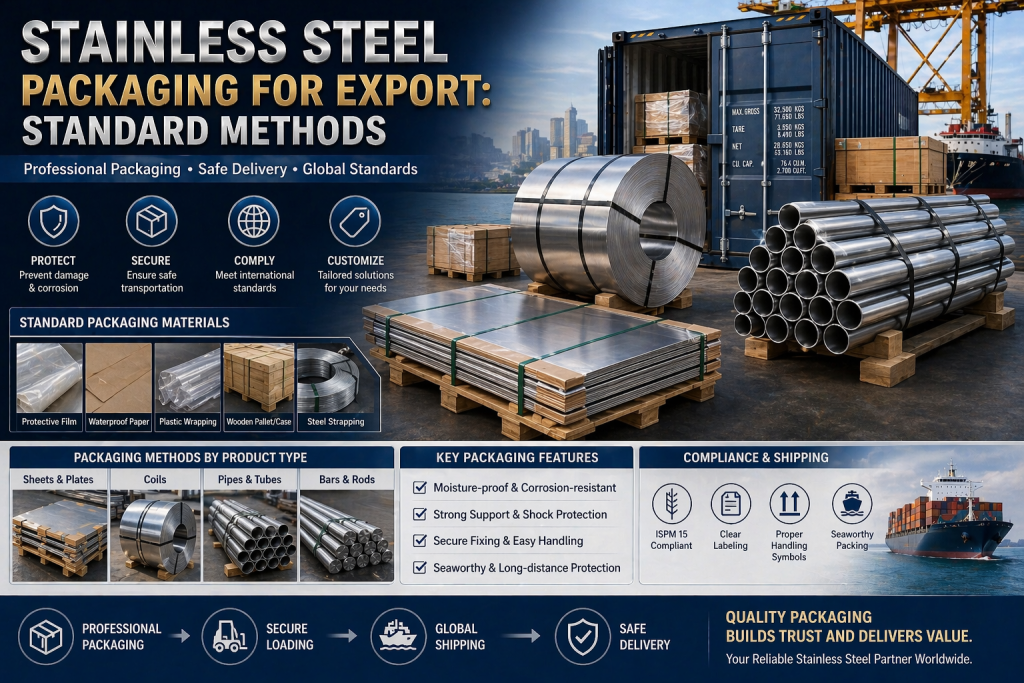
2. Standard Packaging Materials
Export packaging typically involves multiple layers of protection:
- Protective Film: Applied to polished surfaces to prevent scratches
- Waterproof Paper: Provides moisture resistance during shipping
- Plastic Wrapping: Shields against dust and environmental exposure
- Wooden Pallets or Cases: Ensure structural support and easy handling
- Steel Strapping: Secures bundles and prevents movement
The combination of these materials creates a robust barrier against external damage.
3. Packaging Methods by Product Type
Different stainless steel products require tailored packaging solutions:
- Sheets and Plates: Stacked with interleaving paper and secured on pallets
- Coils: Wrapped with waterproof material and protected with edge guards
- Pipes and Tubes: Bundled with caps on ends and reinforced with straps
- Bars and Rods: Packed in bundles with protective wrapping
Customized packaging ensures product safety based on shape, size, and handling requirements.
4. Seaworthy Packaging Standards
For international shipments, especially by sea freight, packaging must meet “seaworthy” standards:
- Moisture-proof and corrosion-resistant materials
- Strong structural support for stacking and container loading
- Shock-resistant design for long transit periods
Seaworthy packaging is essential to withstand harsh marine conditions and extended transit times.
5. Compliance with International Regulations
Export packaging must comply with global standards and regulations:
- ISPM 15: Requirements for wooden packaging materials (fumigation or heat treatment)
- Customs Labeling: Clear marking of product details and origin
- Safety Standards: Proper handling symbols and instructions
Compliance ensures smooth customs clearance and avoids shipment delays.
6. Container Loading and Protection
Proper container loading is as important as packaging itself:
- Even weight distribution to prevent container imbalance
- Use of dunnage and padding materials
- Securing cargo to avoid shifting during transit
Professional loading techniques reduce the risk of damage and improve transport efficiency.
7. Custom Packaging Solutions
Many buyers require customized packaging to meet specific needs:
- Brand labeling and private packaging
- Barcode and tracking systems
- Special protection for high-end or precision products
Customized solutions enhance brand value and logistics management.
8. Best Practices for Export Packaging
To ensure safe and efficient delivery, consider the following best practices:
- Use multi-layer protective packaging
- Inspect packaging quality before shipment
- Work with experienced logistics partners
- Purchase cargo insurance for high-value shipments
Adopting these practices helps minimize risks and improve overall supply chain reliability.
FAQ
Q1: Why is seaworthy packaging important for stainless steel?
Because it protects products from moisture, corrosion, and physical damage during long-distance sea transport.
Q2: What is ISPM 15 compliance?
It is an international standard requiring wooden packaging materials to be treated to prevent pest contamination.
Q3: How are stainless steel coils typically packed?
They are wrapped with waterproof materials, secured with steel straps, and protected with edge guards.
Q4: Can packaging be customized?
Yes, suppliers can provide customized packaging based on branding, labeling, and protection requirements.
Q5: How can buyers ensure packaging quality?
By specifying requirements in contracts, requesting photos or inspections, and working with reliable suppliers.
Conclusion
