
Metal vs Stainless Steel: Key Differences Explained Simply
The terms “metal” and “stainless steel” are often used interchangeably in daily conversation, but they are not the same. Stainless steel is actually one specific category within the much larger world of metals. Understanding the differences between general metals and stainless steel is essential for selecting the right material for construction, manufacturing, industrial engineering, architecture, food processing, and consumer products.
Different metals offer different mechanical properties, corrosion resistance levels, appearance qualities, and long-term durability. Stainless steel has become one of the most important engineered materials globally because of its combination of strength, corrosion resistance, hygienic performance, and modern appearance.
This guide explains the differences between ordinary metals and stainless steel in a simple yet professional way, helping buyers, engineers, fabricators, and project managers make informed material decisions.
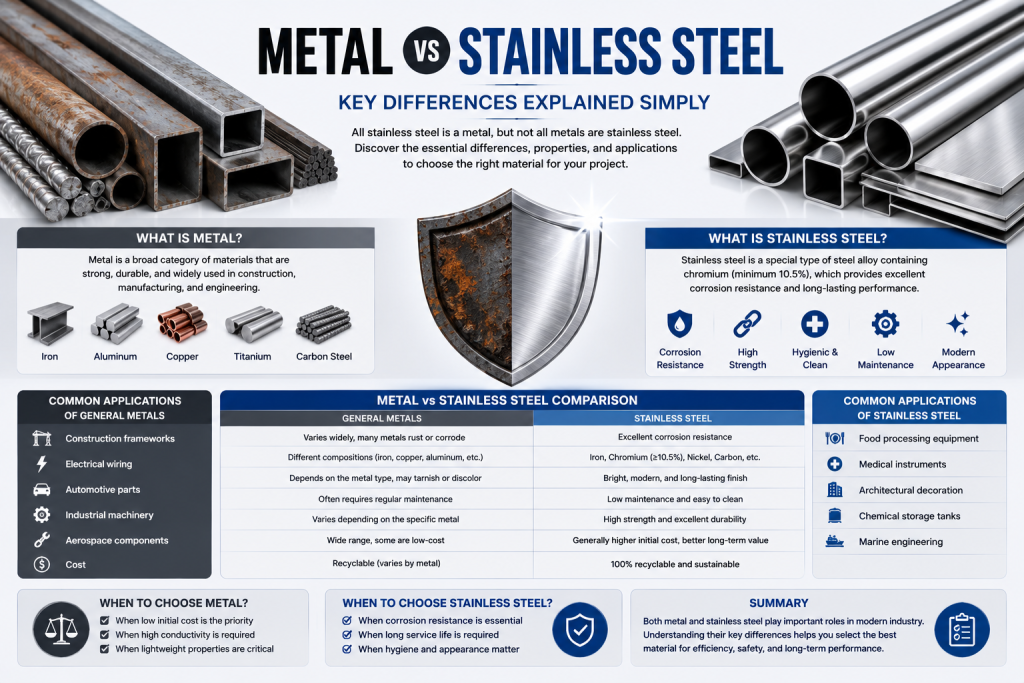 1. What Is Metal?
Metal is a broad category of materials that typically:
- Conduct heat and electricity
- Have high strength and durability
- Can be shaped and fabricated
- Possess metallic luster
There are many types of metals, including:
- Iron
- Aluminum
- Copper
- Titanium
- Zinc
- Carbon steel
- Nickel alloys
Each metal has unique physical and chemical characteristics designed for specific industrial applications.
2. What Is Stainless Steel?
Stainless steel is a special type of steel alloy mainly composed of:
- Iron
- Chromium
- Nickel
- Carbon
To qualify as stainless steel, the material generally contains at least:
10.5% chromium
Chromium forms a thin passive oxide layer on the metal surface, protecting it from corrosion and oxidation.
This protective layer gives stainless steel its:
- Corrosion resistance
- Long lifespan
- Modern appearance
- Low maintenance requirements
3. Main Difference Between Metal and Stainless Steel
| Property | General Metals | Stainless Steel |
|---|---|---|
| Material Category | Broad category | Specific alloy type |
| Corrosion Resistance | Varies widely | Excellent |
| Chromium Content | Usually low or none | Minimum 10.5% |
| Appearance | Depends on metal type | Bright metallic finish |
| Maintenance | Often higher | Low maintenance |
| Cost | Wide price range | Usually higher |
4. Corrosion Resistance Comparison
Ordinary Metals
Many ordinary metals can corrode, rust, or oxidize when exposed to:
- Moisture
- Salt
- Chemicals
- Industrial pollution
For example:
- Carbon steel easily rusts
- Iron oxidizes rapidly outdoors
- Copper develops surface patina
Stainless Steel
Stainless steel is specifically engineered to resist corrosion through its chromium-rich passive layer.
This makes stainless steel highly suitable for:
- Marine environments
- Food-grade industries
- Medical equipment
- Outdoor architecture
Compared with many traditional metals, stainless steel offers significantly longer service life in corrosive environments.
5. Strength and Durability
Different metals provide different mechanical strengths.
General Metal Characteristics
- Aluminum is lightweight
- Copper is highly conductive
- Carbon steel is strong but rust-prone
Stainless Steel Characteristics
- High tensile strength
- Excellent wear resistance
- Strong impact resistance
- Long-term structural stability
Because of these advantages, stainless steel is widely used in infrastructure and industrial engineering.
6. Appearance and Surface Finish
One reason stainless steel is highly popular is its premium visual appearance.
Ordinary Metals
- May discolor over time
- Often require painting or coating
- Can oxidize or tarnish
Stainless Steel
- Modern silver finish
- Reflective surface options
- Decorative polishing available
- Maintains appearance longer
Architectural designers often select stainless steel because of its clean and luxurious aesthetic.
7. Common Types of Stainless Steel
| Grade | Main Features | Applications |
|---|---|---|
| 304 | Excellent corrosion resistance | Food equipment, architecture |
| 316 | Marine-grade corrosion resistance | Coastal and chemical industries |
| 430 | Cost-effective decorative steel | Appliances and decoration |
| 420 | High hardness | Blades and tools |
| 2205 Duplex | High strength and corrosion resistance | Offshore engineering |
8. Industrial Applications
Applications of General Metals
- Electrical wiring
- Aircraft structures
- Construction frameworks
- Industrial machinery
Applications of Stainless Steel
- Food processing equipment
- Medical instruments
- Chemical storage tanks
- Decorative architecture
- Water treatment systems
- Marine engineering
Stainless steel has become one of the most versatile engineering materials in the global market.
9. Cost Comparison
General metals vary greatly in price.
For example:
- Carbon steel is relatively inexpensive
- Titanium is expensive
- Copper prices fluctuate significantly
Stainless steel is usually more expensive than ordinary carbon steel because of:
- Chromium content
- Nickel content
- Advanced manufacturing processes
However, stainless steel often provides better long-term value because of reduced maintenance and longer service life.
10. Environmental and Sustainability Benefits
Modern industries increasingly prioritize recyclable and sustainable materials.
Stainless steel offers:
- High recyclability
- Long lifecycle performance
- Reduced maintenance chemicals
- Lower replacement frequency
Many stainless steel products contain recycled content and can be fully recycled at the end of their service life.
11. Which Material Should You Choose?
Choose General Metals If:
- Specific conductivity is required
- Weight reduction is critical
- Low initial cost is the priority
Choose Stainless Steel If:
- Corrosion resistance is important
- Long service life is required
- Hygienic performance matters
- Modern appearance is preferred
- Low maintenance is desired
Frequently Asked Questions (FAQ)
Is stainless steel considered a metal?
Yes. Stainless steel is a specific type of metal alloy containing iron, chromium, and other elements.
Why does stainless steel not rust easily?
Its chromium content forms a passive oxide layer that protects the surface from corrosion.
Which is stronger: metal or stainless steel?
The answer depends on the specific metal type. Some metals are softer, while many stainless steel grades provide excellent strength and durability.
Is stainless steel more expensive than regular metal?
Generally yes, especially compared with carbon steel, due to alloying elements and manufacturing costs.
What industries use stainless steel most?
Food processing, medical equipment, construction, marine engineering, chemical processing, and architecture widely use stainless steel.
Conclusion: Metal is a broad category that includes many different materials with unique properties, while stainless steel is a specialized corrosion-resistant alloy engineered for durability, hygiene, and long-term performance. Although stainless steel usually costs more initially, its superior corrosion resistance, modern appearance, structural reliability, and low maintenance requirements make it one of the most valuable industrial materials in the modern world. Selecting the right material depends on environmental conditions, engineering requirements, budget considerations, and long-term operational goals.
