
How to Paint Stainless Steel Properly for Long-Lasting Results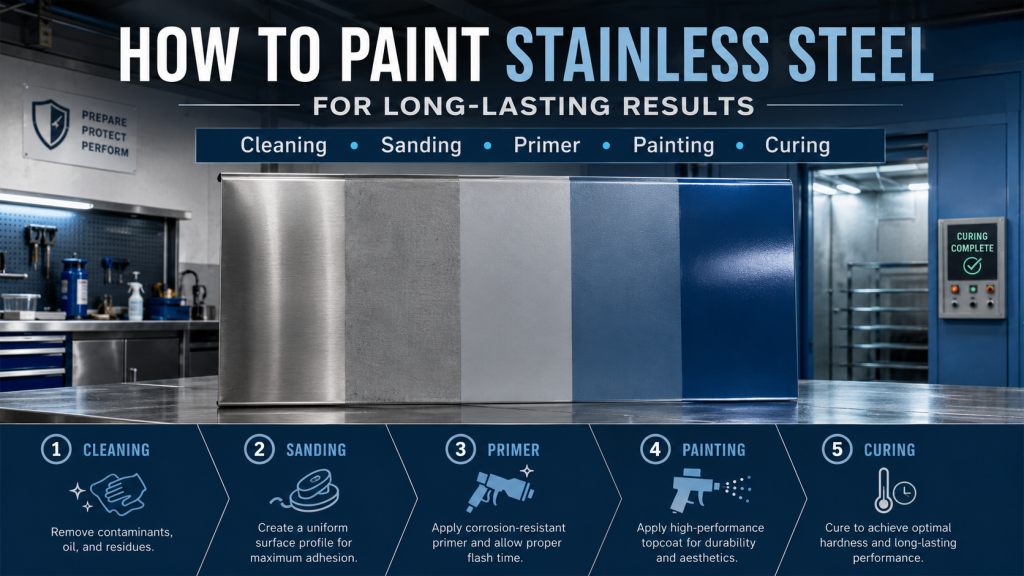
Stainless steel is known for its clean metallic appearance, corrosion resistance and long service life. However, in many projects, buyers and manufacturers still need to paint stainless steel for color matching, branding, decoration, additional protection or improved appearance.
The challenge is that stainless steel is not as easy to paint as carbon steel or ordinary metal. Its smooth surface and passive chromium oxide layer make paint adhesion more difficult. If the surface is not cleaned, roughened and primed correctly, the coating may peel, bubble, crack or fail much earlier than expected.
This guide explains how to paint stainless steel properly, including surface preparation, cleaning, sanding, primer selection, paint systems, curing, powder coating, grade selection and common mistakes. For related stainless steel products, visit stainless steel sheet, stainless steel coil, stainless steel strip and the Jude Steel Stainless Steel Grade Center.
Quick Answer: Can You Paint Stainless Steel?
Yes, stainless steel can be painted successfully, but only when the correct coating process is followed. Stainless steel is naturally smooth and corrosion resistant, so paint needs a prepared surface and a suitable primer to bond properly.
| Step | Purpose | Why It Matters |
|---|---|---|
| Cleaning | Remove oil, grease, dust, fingerprints and contaminants | Contamination is one of the most common causes of coating failure |
| Surface roughening | Create mechanical tooth for paint adhesion | Smooth stainless steel surfaces reduce coating bond strength |
| Priming | Create an adhesion layer between stainless steel and paint | Primer helps prevent peeling and improves long-term durability |
| Painting | Apply a suitable topcoat for the environment | Different paints perform differently indoors, outdoors and in industrial environments |
| Curing | Allow coating to fully harden and bond | Rushed curing can reduce hardness, adhesion and chemical resistance |
1. Why Paint Does Not Easily Stick to Stainless Steel
Stainless steel resists corrosion because chromium in the alloy forms a thin passive oxide layer on the surface. This layer is one of the reasons stainless steel is so durable, but it also makes the surface smooth, non-porous and less friendly to paint adhesion.
Unlike carbon steel, stainless steel does not easily create a rough rust layer that paint can grip. That means paint needs mechanical adhesion and chemical bonding support from a suitable primer.
Main Adhesion Challenges
- Smooth and non-porous surface
- Passive chromium oxide layer
- Oil, grease and fingerprints from handling
- Possible polishing compounds or protective films
- Low surface profile if the material is bright, mirror or BA finish
- Improper primer or incompatible paint system
2. When Should Stainless Steel Be Painted?
In many applications, unpainted stainless steel is already the best choice because it offers corrosion resistance, clean appearance and low maintenance. However, painting can be useful when the project requires color, branding or extra surface protection.
| Application | Why Paint Stainless Steel? | Typical Coating Requirement |
|---|---|---|
| Architecture | Color matching, decorative finish and facade design | Weather-resistant polyurethane or powder coating |
| Industrial equipment | Identification, corrosion protection and chemical resistance | Epoxy primer and industrial topcoat |
| Outdoor products | UV resistance, branding and weather durability | UV-stable polyurethane or powder coating |
| Appliances | Color finish, anti-fingerprint appearance and product design | Decorative coating or powder coating |
| Marine products | Additional protection and color coding | High-performance coating system with suitable stainless grade |
| Signage and furniture | Brand color, matte appearance and surface protection | Acrylic, polyurethane or powder coating |
Common Reasons to Paint Stainless Steel
- Custom color requirement
- Branding and product identity
- Decorative appearance
- Additional protection in outdoor environments
- Reduced glare compared with bright metal finish
- Matching with other painted metal components
- Surface safety marking or industrial color coding
3. Step One: Clean the Stainless Steel Surface
Cleaning is the first and most important step. Even a thin layer of oil, grease, dust or fingerprints can prevent the primer from bonding correctly. Before sanding or painting, the stainless steel surface must be completely clean.
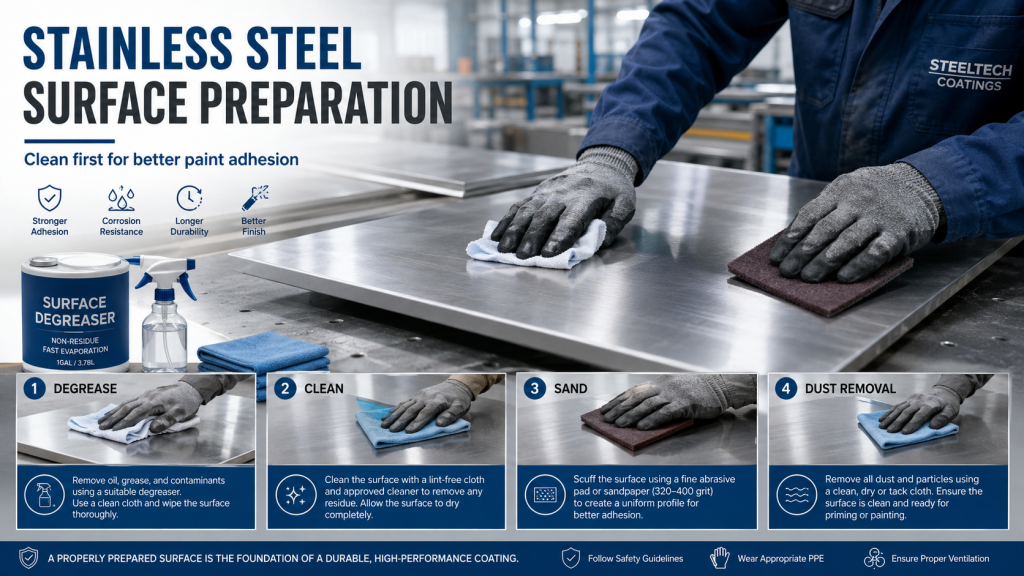
What to Remove Before Painting
- Oil and grease
- Dust and dirt
- Fingerprints
- Salt deposits
- Protective film residue
- Polishing compounds
- Cutting fluids or machining coolants
- Moisture and water stains
Recommended Cleaning Methods
| Cleaner / Method | Best Use | Notes |
|---|---|---|
| Degreaser | Oil and industrial contamination | Use a metal-compatible degreaser and rinse if required |
| Isopropyl alcohol | Light fingerprints and final wipe | Useful for small parts, panels and decorative surfaces |
| Acetone | Fast solvent cleaning | Use with proper ventilation and safety precautions |
| Mild detergent | General dirt and water-soluble contamination | Dry completely before sanding or priming |
| Clean lint-free cloth | Final wipe | Avoid dirty cloths that may redeposit oil |
Cleaning Mistakes to Avoid
- Using oily detergents that leave residue
- Painting over fingerprints
- Touching the cleaned surface with bare hands
- Leaving moisture before primer application
- Using contaminated rags or dirty brushes
- Skipping final solvent wipe before priming
4. Step Two: Roughen the Surface for Better Adhesion
After cleaning, the surface should be roughened to create a mechanical profile. Paint adheres better to a slightly textured surface than to a smooth polished stainless steel surface.
Common Surface Roughening Methods
| Method | Best Use | Advantages | Limitations |
|---|---|---|---|
| Sanding | Small panels, DIY projects, repair work | Simple, low cost and flexible | May be uneven if done by hand |
| Abrasive pad | Light surface preparation | Good for decorative parts and edges | May not create enough profile for heavy-duty coatings |
| Mechanical grinding | Industrial parts and welded surfaces | Creates strong mechanical profile | Requires skill to avoid deep scratches |
| Abrasive blasting | Industrial coating systems | Provides uniform profile and strong adhesion | Requires equipment and process control |
| Brush finishing | Decorative painted or partially painted panels | Creates directional texture | Must be consistent for visible parts |
Suggested Abrasive Range
For many stainless steel painting projects, 120 to 220 grit abrasive is commonly used to create a suitable profile. The exact roughness should follow the primer and coating manufacturer’s technical requirements.
5. Step Three: Apply the Correct Primer
Primer is the key layer between stainless steel and paint. A good primer improves adhesion, helps protect the metal and supports the final coating system. Without primer, paint failure becomes much more likely.
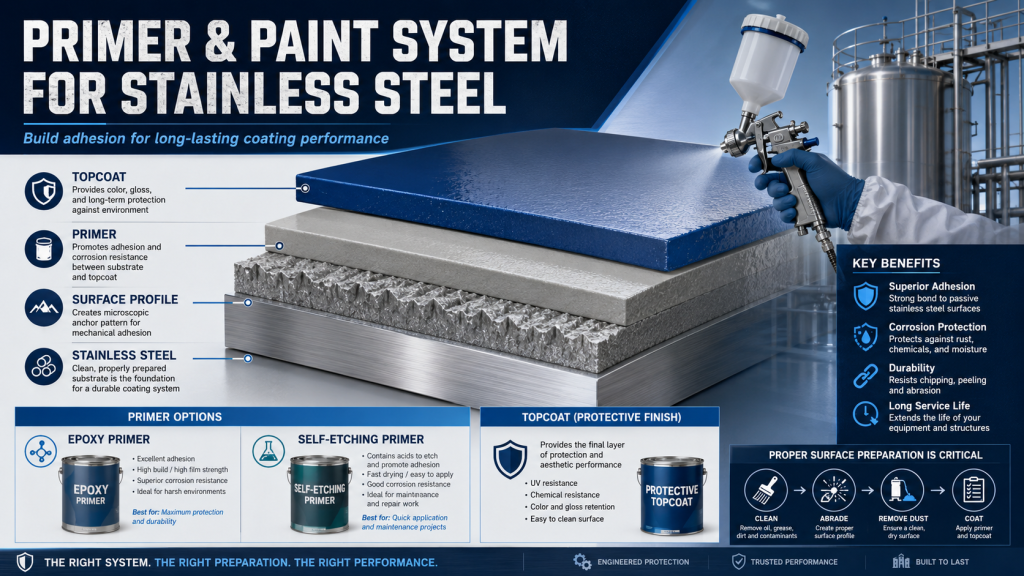
| Primer Type | Best Use | Main Benefit |
|---|---|---|
| Epoxy primer | Industrial equipment, chemical exposure and water contact | Strong adhesion and chemical resistance |
| Self-etching primer | General metal adhesion and spray painting | Improves bonding to smooth metal surfaces |
| Zinc-rich primer | Heavy-duty protection and structural components | Additional corrosion protection in demanding environments |
| High-build primer | Parts requiring surface leveling | Helps fill minor surface imperfections |
| Powder coating pretreatment | Powder coating systems | Improves powder adhesion and coating durability |
Why Primer Matters
- Improves adhesion to stainless steel
- Creates a stable base layer for topcoat
- Reduces peeling and flaking risk
- Improves corrosion protection
- Helps the paint system survive cleaning, moisture and UV exposure
- Supports better coating thickness and finish quality
6. Step Four: Choose the Right Paint for Stainless Steel
Different paints perform differently. The best paint depends on whether the stainless steel will be used indoors, outdoors, in a marine environment, in a chemical plant or as a decorative product.
| Paint Type | Best Application | Strength | Limitation |
|---|---|---|---|
| Acrylic paint | Indoor decoration, furniture and light-duty items | Easy to apply and available in many colors | Not ideal for heavy industrial or chemical exposure |
| Epoxy paint | Industrial equipment, water exposure and chemical environments | Strong adhesion, hardness and chemical resistance | May need UV-resistant topcoat outdoors |
| Polyurethane paint | Outdoor architecture, UV exposure and decorative metal | Good weather resistance and color retention | Requires correct primer and application conditions |
| Powder coating | Appliances, furniture, railings, outdoor products and panels | Durable, attractive and uniform finish | Requires powder coating equipment and curing oven |
| Fluorocarbon coating | High-end exterior architecture and facades | Excellent UV and weather resistance | Higher cost and stricter process control |
Paint Selection by Environment
- Indoor decorative use: acrylic, polyurethane or powder coating
- Outdoor architecture: polyurethane, fluorocarbon or powder coating
- Industrial equipment: epoxy primer plus epoxy or polyurethane topcoat
- Marine atmosphere: high-performance primer plus marine-grade coating system
- Food equipment exterior: coating system must match hygiene and cleaning requirements
- Appliance panels: powder coating or decorative coating system is often used
7. Step Five: Apply Thin Coats and Allow Proper Curing
Applying one thick coat is usually a mistake. Thin, controlled coats bond better and cure more evenly. Follow the paint manufacturer’s recommended film thickness, recoat window, curing time, temperature and humidity requirements.
Application Tips
- Apply primer evenly and avoid heavy buildup
- Allow primer to dry according to technical instructions
- Apply multiple thin topcoats instead of one thick coat
- Maintain suitable temperature and humidity
- Avoid painting in dusty or windy environments
- Do not handle or package the part before full curing
- Protect the surface from moisture during early curing
Why Curing Matters
| Curing Factor | Effect on Coating |
|---|---|
| Correct curing time | Improves adhesion, hardness and durability |
| Correct temperature | Allows the coating chemistry to develop properly |
| Correct humidity | Reduces bubbling, blush, poor drying and surface defects |
| Full hardness before use | Reduces scratches, dents and early coating damage |
| Proper packaging after cure | Prevents imprint marks and surface sticking |
8. Spray Painting vs Powder Coating Stainless Steel
Spray painting and powder coating are both common methods for coloring stainless steel, but they are not the same. Spray painting is more flexible and suitable for small batches, repairs and site work. Powder coating is more suitable for factory production and durable decorative finishes.
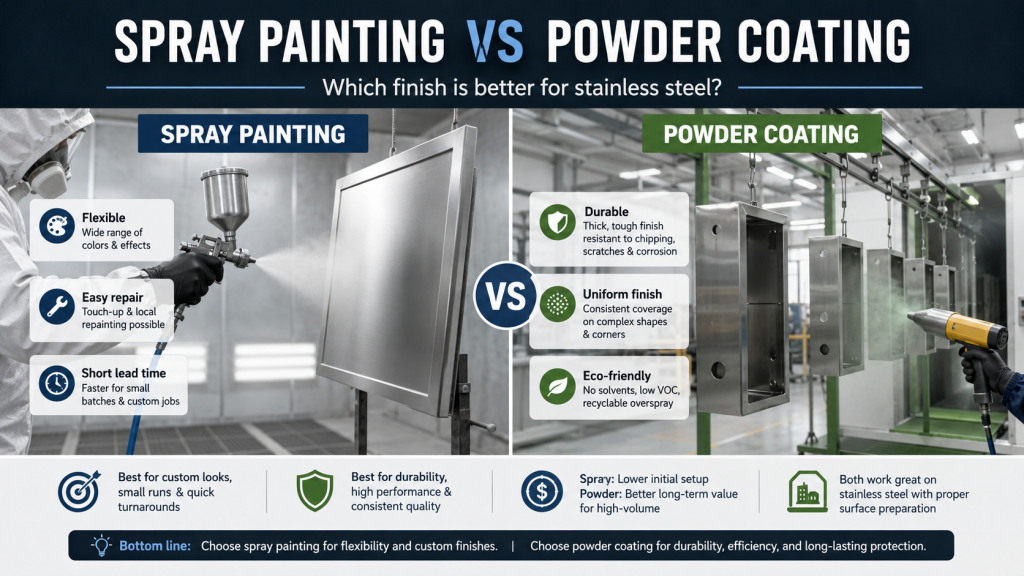
| Factor | Spray Painting | Powder Coating |
|---|---|---|
| Best Use | Small parts, repairs, decorative projects and on-site work | Factory production, panels, furniture, appliances and outdoor products |
| Durability | Depends on primer and paint system | Generally strong when properly pretreated and cured |
| Appearance | Flexible color and finish options | Uniform surface with good consistency |
| Equipment Requirement | Lower | Higher; powder equipment and curing oven required |
| Repairability | Easier to touch up | More difficult to repair perfectly |
| Production Efficiency | Good for flexible batches | Excellent for repeatable industrial production |
9. Best Stainless Steel Grades for Painted Applications
Paint performance depends not only on the coating system but also on the stainless steel grade. A coating cannot fully compensate for a poorly selected base material in a harsh environment.
| Stainless Steel Grade | Painted Application | Selection Reason |
|---|---|---|
| 304 Stainless Steel | Indoor panels, furniture, decorative products and general equipment | Good balance of corrosion resistance, formability and cost |
| 316L Stainless Steel | Outdoor, coastal and marine-related painted products | Better chloride resistance than 304 |
| 430 Stainless Steel | Appliances, indoor decorative panels and cost-sensitive products | Magnetic, economical and suitable for many dry indoor uses |
| 2205 Duplex Stainless Steel | Harsh industrial or chloride environments | Higher strength and stronger resistance to chloride stress corrosion |
| Stainless steel sheet / coil | Painted panels, pre-finished products and fabricated components | Available in many thicknesses, finishes and processing forms |
For custom painted or surface-treated stainless steel projects, buyers should confirm grade, thickness, surface finish, processing sequence and final service environment before production.
10. Painted Stainless Steel Selection Guide
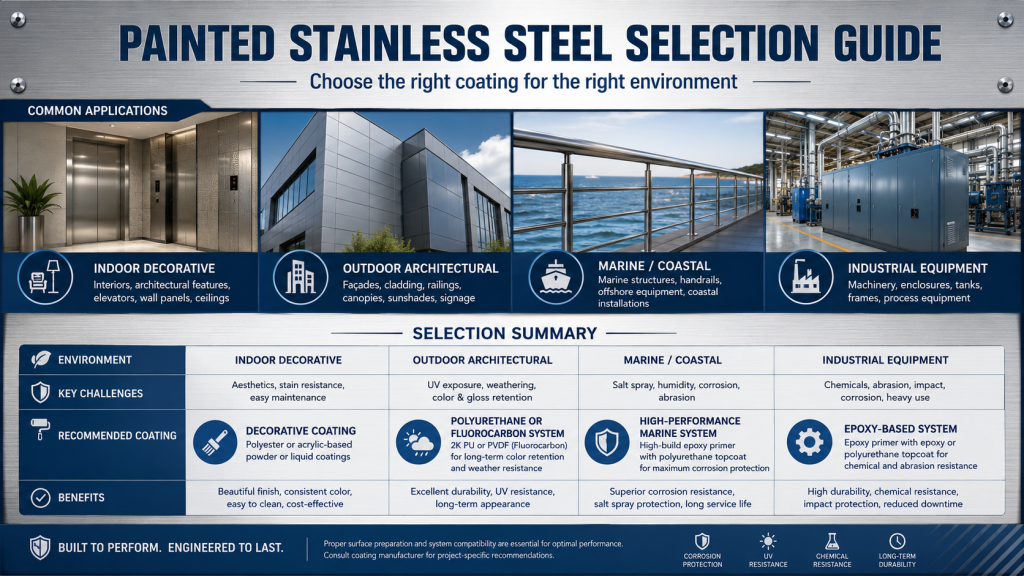
| Project Requirement | Recommended Solution | Reason |
|---|---|---|
| Indoor decorative panel | 304 or 430 with primer and decorative topcoat | Good appearance and cost-effective performance |
| Outdoor architectural panel | 304 or 316L with polyurethane or fluorocarbon coating | Better weather resistance and color retention |
| Marine atmosphere | 316L or duplex stainless steel with high-performance coating | Better chloride resistance and longer service life |
| Industrial equipment | 304, 316L or duplex with epoxy primer and industrial topcoat | Improved chemical and mechanical durability |
| Appliance product | 430 or 304 with powder coating or decorative coating | Good appearance and mass production efficiency |
| Food equipment exterior | 304 or 316L with approved coating system | Better cleaning resistance and hygiene compatibility |
| Heavy-duty corrosion environment | 316L, 2205 or higher alloy with engineered coating system | Base metal and coating must work together |
Choose Painted Stainless Steel If:
- You need a custom color
- The project requires brand identity
- The surface must match other architectural materials
- The product needs additional protection
- The stainless steel surface is used in visible decorative applications
- You need lower glare or matte appearance
- The coating system is suitable for the service environment
Keep Stainless Steel Unpainted If:
- You want the natural metallic stainless appearance
- The surface must be cleaned aggressively
- The environment is already suitable for bare stainless steel
- Scratches or coating damage would create maintenance concerns
- The product requires maximum hygiene and easy cleaning
- The buyer prefers low-maintenance bare metal finish
11. Common Mistakes When Painting Stainless Steel
- Painting directly on polished stainless steel without sanding
- Skipping degreasing and cleaning
- Touching the cleaned surface with bare hands
- Using ordinary wall paint instead of metal-compatible paint
- Skipping primer
- Applying too thick a coat
- Rushing the curing process
- Using indoor paint for outdoor UV exposure
- Using low-grade stainless steel in harsh corrosion environments
- Packaging or stacking painted parts before full curing
12. Maintenance Tips for Painted Stainless Steel
Painted stainless steel should be maintained according to the coating system. The goal is to protect the topcoat and avoid exposing the stainless steel substrate or primer layer.
Maintenance Recommendations
- Clean with mild detergent and soft cloth
- Avoid steel wool and abrasive pads
- Do not use strong chlorine-based cleaners unless the coating allows it
- Rinse salt deposits from outdoor or marine surfaces
- Repair chips and scratches early
- Avoid dragging sharp objects across coated surfaces
- Follow the coating manufacturer’s cleaning instructions
Frequently Asked Questions
Can stainless steel be painted?
Yes. Stainless steel can be painted successfully, but it requires proper surface preparation, primer and a suitable paint system. Direct painting without preparation often leads to poor adhesion.
Why does paint not stick easily to stainless steel?
Stainless steel has a smooth passive chromium oxide layer that protects the metal from corrosion but reduces paint adhesion. Surface roughening and primer are needed to improve bonding.
Do you need primer before painting stainless steel?
Yes. Primer is strongly recommended because it creates an adhesion layer between stainless steel and the topcoat. Epoxy primer, self-etching primer and zinc-rich primer may be used depending on the application.
What is the best paint for stainless steel?
The best paint depends on the environment. Epoxy coatings are suitable for industrial and chemical exposure, polyurethane coatings are good for outdoor UV resistance, and acrylic coatings can be used for light indoor decorative applications.
Can stainless steel be spray painted?
Yes. Stainless steel can be spray painted if it is cleaned, sanded and primed correctly. Multiple thin coats are better than one thick coat.
Can stainless steel be powder coated?
Yes. Powder coating is widely used for stainless steel products such as appliances, panels, furniture, railings and outdoor components. Proper pretreatment and curing are essential.
How long does paint last on stainless steel?
Coating life depends on surface preparation, primer quality, paint system, curing, UV exposure, salt exposure and maintenance. Indoor painted stainless steel can last many years, while outdoor and marine applications require higher-performance coating systems.
Conclusion
Painting stainless steel properly is possible, but it requires a controlled process. The surface must be cleaned to remove oil, grease, dust and fingerprints. Then it should be roughened to improve mechanical adhesion. A stainless-compatible primer should be applied before the final paint or coating system.
For indoor decorative applications, acrylic, polyurethane or powder coating may be suitable. For industrial equipment, epoxy primers and durable industrial topcoats are often preferred. For outdoor or marine projects, stainless steel grade selection and coating quality become even more important.
The key to long-lasting painted stainless steel is not only the paint itself. It is the complete system: stainless steel grade, surface preparation, primer, topcoat, curing and maintenance. Jude Steel supplies stainless steel sheets, coils, strips and processing services for global buyers. Explore more at Judesteel.com, or visit our pages for stainless steel sheet, stainless steel coil, stainless steel strip and brushing service.
