
Stainless Steel Price Per Ton: Key Factors You Should Know
The price of stainless steel per ton is a critical metric for buyers, engineers, and procurement professionals
across industries such as construction, manufacturing, energy, and transportation. However, stainless steel pricing
is not fixed—it fluctuates based on multiple global and material-specific factors.
Understanding these price drivers is essential for making informed purchasing decisions, optimizing costs, and
securing reliable supply in a competitive market.
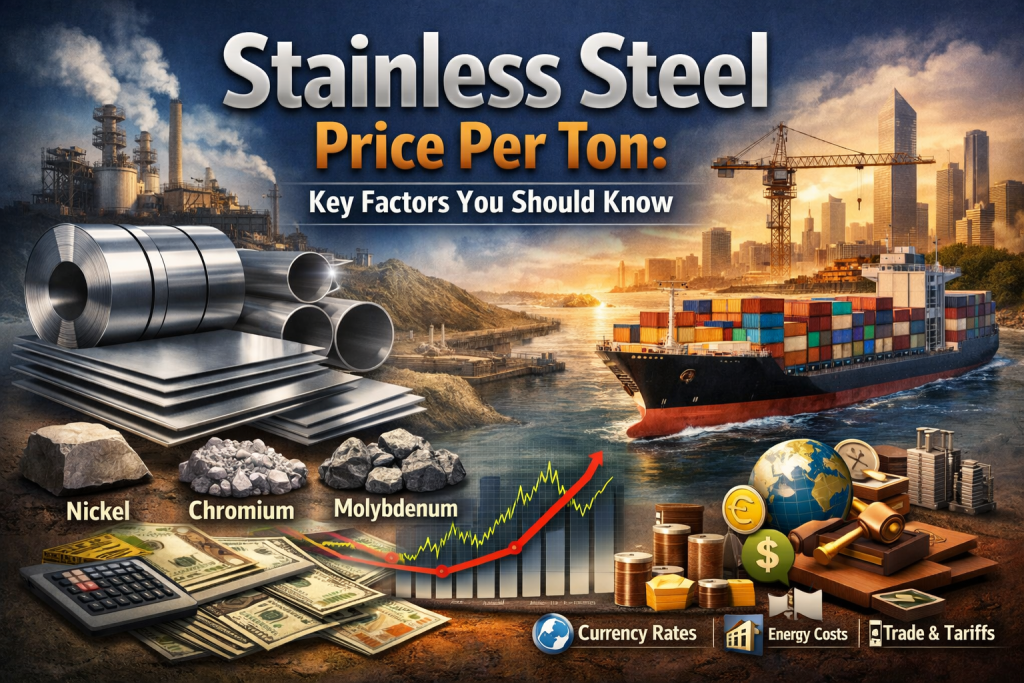
1. Raw Material Costs
The most significant factor influencing stainless steel prices is the cost of raw materials, particularly:
- Nickel: A major alloying element that directly impacts corrosion resistance and price
- Chromium: Essential for stainless properties and oxidation resistance
- Molybdenum: Enhances strength and corrosion resistance in premium grades
Fluctuations in global commodity markets can lead to rapid changes in stainless steel pricing.
2. Stainless Steel Grade
Different stainless steel grades have varying compositions, which significantly affect price per ton.
- 304 Stainless Steel: Widely used, balanced cost and performance
- 316 Stainless Steel: Higher cost due to molybdenum content
- Duplex Stainless Steel: Premium pricing with superior strength
Higher alloy content generally results in higher costs.
3. Manufacturing and Processing Costs
Production processes also influence pricing:
- Hot rolling vs cold rolling
- Surface finishing (2B, BA, mirror finish)
- Precision cutting and customization
Advanced processing adds value but increases overall cost per ton.
4. Supply and Demand Dynamics
Global and regional supply-demand balance plays a crucial role in price fluctuations.
- Infrastructure and construction demand
- Automotive and energy sector growth
- Production capacity and export policies
Strong demand or supply constraints typically drive prices upward.
5. Energy and Production Costs
Steel production is energy-intensive. Rising electricity, natural gas, and transportation costs
directly affect manufacturing expenses and final pricing.
6. Currency Exchange Rates
Since stainless steel is traded globally, exchange rate fluctuations impact pricing,
especially for international buyers and exporters.
7. Logistics and Transportation
Freight costs, shipping routes, and delivery timelines contribute to the final price per ton.
- Ocean freight rates
- Port handling charges
- Packaging and insurance
8. Market Trends and Policy Factors
Government policies, tariffs, and environmental regulations can significantly influence
stainless steel prices.
- Import/export restrictions
- Carbon emission regulations
- Trade policies and anti-dumping measures
9. Typical Price Range (Reference)
While prices vary, general reference ranges are:
- 304 Stainless Steel: Moderate pricing
- 316 Stainless Steel: Higher pricing due to alloy content
- Duplex Grades: Premium pricing
For accurate pricing, it is recommended to request real-time quotations from suppliers.
FAQ
Q1: What is the average price of stainless steel per ton?
Prices vary depending on grade, raw material costs, and market conditions. Real-time quotes are recommended.
Q2: Why does stainless steel price fluctuate frequently?
Because it is heavily influenced by raw material markets, especially nickel and chromium prices.
Q3: Which stainless steel grade is most cost-effective?
Grade 304 is generally considered the most cost-effective for general applications.
Q4: How can I reduce purchasing costs?
Buy in bulk, choose appropriate grades, and work with reliable suppliers offering competitive pricing.
Q5: Does surface finish affect price?
Yes, higher-quality finishes such as mirror or BA increase processing costs and overall price.
Conclusion
The price of stainless steel per ton is influenced by a complex combination of raw material costs,
manufacturing processes, market dynamics, and global economic factors. By understanding these variables,
buyers can make more strategic purchasing decisions and better manage cost efficiency.
