
Common Problems When Buying Stainless Steel Overseas: Risks, Challenges, and Solutions
With the globalization of the steel industry, sourcing stainless steel from overseas suppliers—especially from major manufacturing countries—has become increasingly common. While international procurement offers advantages in pricing, variety, and scalability, it also introduces a range of challenges that buyers must carefully manage.
Understanding the common problems associated with overseas purchasing is essential for minimizing risks, ensuring product quality, and maintaining a reliable supply chain.
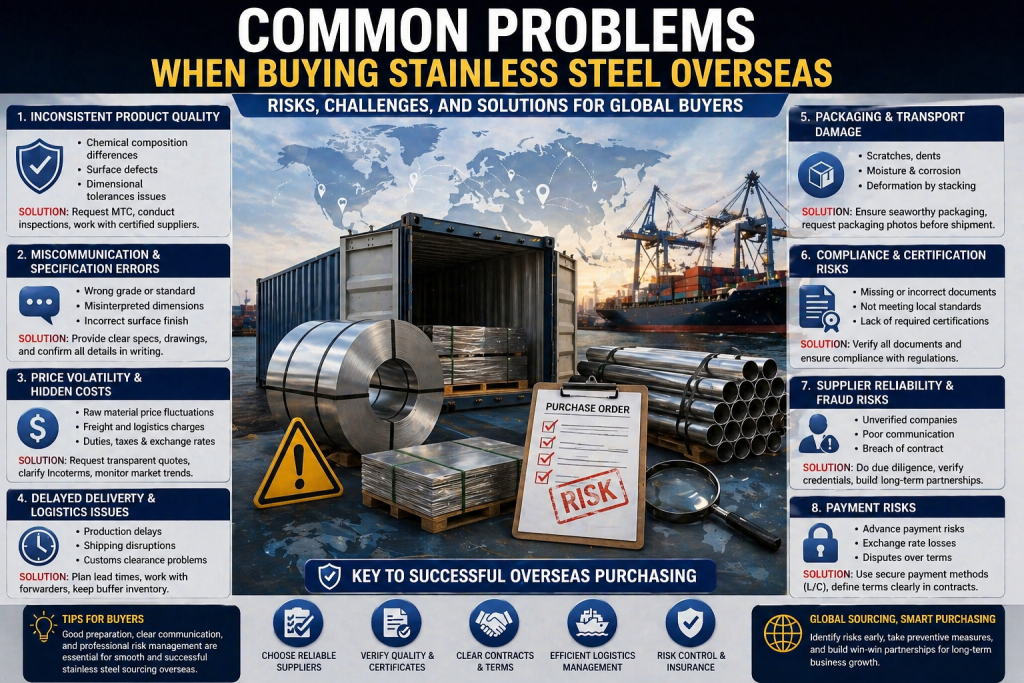
1. Inconsistent Product Quality
One of the most frequent issues in international sourcing is inconsistency in product quality. Variations
in raw materials, production processes, and quality control standards can lead to discrepancies between
ordered specifications and delivered goods.
- Differences in chemical composition
- Surface defects such as scratches or oxidation
- Dimensional tolerances not meeting requirements
Solution: Always request Mill Test Certificates (MTC), conduct third-party inspections,
and work with certified suppliers.
2. Miscommunication and Specification Errors
Language barriers and unclear technical specifications can result in incorrect orders. Even small
misunderstandings can lead to costly delays or unusable materials.
- Incorrect grade selection (e.g., 304 vs 316)
- Misinterpretation of standards (ASTM, EN, JIS)
- Errors in size, thickness, or surface finish
Solution: Provide detailed technical drawings, standardized specifications,
and confirm all details in written contracts.
3. Price Volatility and Hidden Costs
Stainless steel prices are influenced by raw material costs, especially nickel and chromium.
Additionally, overseas procurement often includes hidden costs.
- Freight and logistics charges
- Import duties and taxes
- Currency exchange fluctuations
Solution: Request transparent quotations, clarify Incoterms (FOB, CIF, EXW),
and monitor market trends before placing orders.
4. Delayed Delivery and Logistics Issues
International shipping involves multiple stages, making delivery timelines less predictable.
Delays can disrupt production schedules and increase inventory costs.
- Production delays at the mill
- Port congestion and shipping disruptions
- Customs clearance issues
Solution: Plan lead times carefully, work with experienced freight forwarders,
and maintain buffer inventory when necessary.
5. Packaging and Transportation Damage
Improper packaging can lead to damage during transit, especially for long-distance sea shipments.
- Surface scratches and dents
- Moisture exposure and corrosion
- Deformation due to improper stacking
Solution: Ensure export-standard seaworthy packaging and request packaging photos
before shipment.
6. Compliance and Certification Risks
Different countries have varying regulatory requirements for imported steel products.
Non-compliance can result in delays, fines, or rejection of goods.
- Missing or incorrect documentation
- Failure to meet local standards
- Lack of required certifications
Solution: Verify all documentation, including certificates of origin, MTCs,
and compliance with local regulations.
7. Supplier Reliability and Fraud Risks
Not all suppliers operate with the same level of professionalism or transparency.
Buyers may face risks related to unreliable suppliers or fraudulent transactions.
- Unverified companies or intermediaries
- Inconsistent communication
- Failure to meet contractual obligations
Solution: Conduct due diligence, verify company credentials, and prioritize
long-term partnerships with reputable suppliers.
8. Payment Risks
International transactions involve financial risks, particularly when dealing with new suppliers.
- Advance payments without guarantees
- Currency exchange losses
- Disputes over payment terms
Solution: Use secure payment methods such as Letters of Credit (L/C) or staged payments,
and clearly define terms in contracts.
FAQ
Q1: What is the biggest risk when buying stainless steel overseas?
Quality inconsistency and supplier reliability are the most common risks.
Q2: How can I verify a supplier’s credibility?
Check certifications, request references, and conduct third-party audits or inspections.
Q3: What documents are essential for international purchases?
Commercial invoice, packing list, bill of lading, certificate of origin, and MTC are essential.
Q4: How can I avoid delivery delays?
Plan ahead, confirm production schedules, and work with experienced logistics partners.
Q5: Is it safe to pay in advance?
Advance payment carries risk; using L/C or partial payments with milestones is safer.
Conclusión
Buying stainless steel overseas offers significant advantages but requires careful risk management.
By understanding common challenges—such as quality issues, logistics delays, and compliance risks—and implementing effective solutions, buyers can achieve reliable sourcing, cost efficiency, and long-term business success in the global market.
