
Brushed Nickel vs Stainless Steel: Complete Comparison Guide
When selecting materials for kitchens, bathrooms, architectural decoration, or industrial applications, brushed nickel and stainless steel are two of the most popular choices. Both materials offer modern aesthetics, durability, and corrosion resistance, but they differ significantly in composition, appearance, maintenance requirements, and long-term performance.
Understanding the differences between brushed nickel and stainless steel is essential for homeowners, designers, contractors, and industrial buyers seeking the best balance of functionality, durability, and visual appeal.
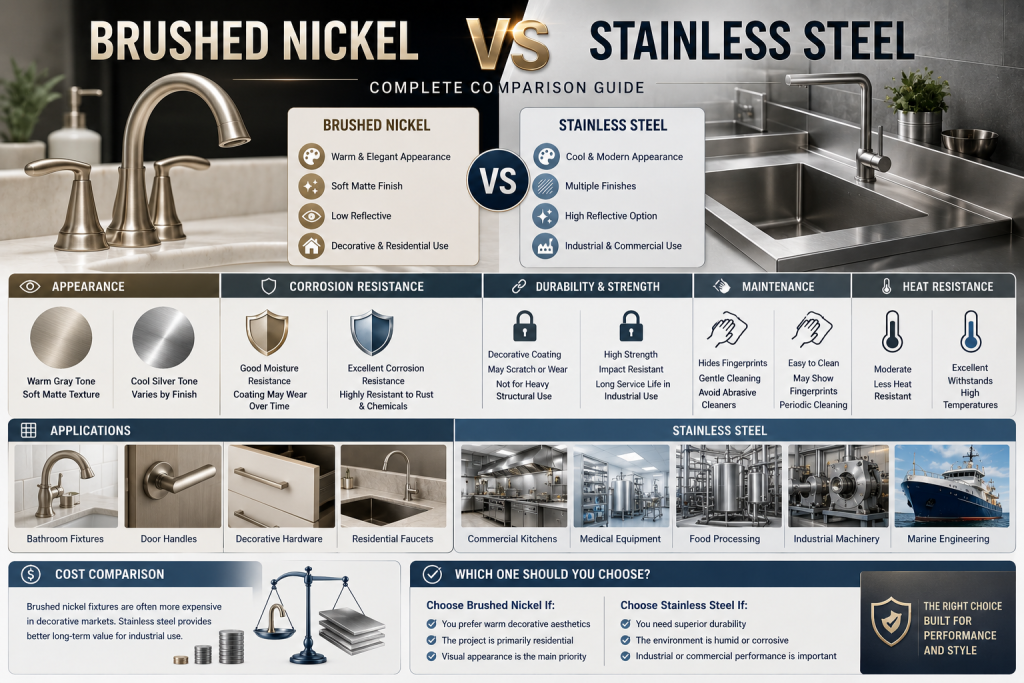
1. What Is Brushed Nickel?
Brushed nickel is a surface finish created by applying a nickel coating to metal substrates such as brass or zinc alloy and then brushing the surface with fine abrasives to produce a matte texture.
Unlike polished finishes, brushed nickel has:
- Soft metallic appearance
- Warm gray tone
- Low-reflective matte texture
- Decorative and premium visual style
Brushed nickel is widely used in:
- Bathroom fixtures
- Kitchen faucets
- Door handles
- Interior decorative hardware
2. What Is Stainless Steel?
Stainless steel is an iron-based alloy containing chromium, nickel, and other alloying elements that provide corrosion resistance and mechanical strength.
Its corrosion resistance comes from a chromium oxide passive layer that naturally forms on the surface.
Common stainless steel grades include:
- Acero inoxidable 304
- Acero inoxidable 316
- Acero inoxidable 430
Stainless steel can also have different finishes, including brushed, polished, satin, and mirror finishes.
3. Appearance Comparison
| Feature | Brushed Nickel | Stainless Steel |
|---|---|---|
| Color Tone | Warm gray | Cool silver |
| Surface Texture | Soft matte | Varies by finish |
| Visual Style | Decorative and elegant | Modern and industrial |
| Fingerprint Visibility | Low | Moderate |
Brushed nickel is often preferred in luxury interior design due to its warmer and softer appearance, while stainless steel is favored for contemporary and industrial aesthetics.
4. Corrosion Resistance Comparison
Brushed Nickel
- Good moisture resistance
- Suitable for indoor decorative applications
- Protective coating may wear over time
Stainless Steel
- Excellent corrosion resistance
- Highly resistant to rust and chemicals
- Suitable for harsh industrial and marine environments
In demanding environments involving chemicals, saltwater, or heavy moisture exposure, stainless steel generally offers superior long-term performance.
5. Durability and Strength
One of the major differences between brushed nickel and stainless steel is structural strength.
Brushed Nickel
- Mainly decorative coating
- May scratch or wear over time
- Not designed for heavy structural use
Stainless Steel
- High mechanical strength
- Excellent impact resistance
- Long service life in industrial applications
Stainless steel is significantly stronger and more durable for commercial and engineering applications.
6. Maintenance Requirements
Brushed Nickel
- Hides fingerprints well
- Requires gentle cleaning
- Abrasive cleaners may damage finish
Stainless Steel
- Easy to sanitize and clean
- Can show fingerprints depending on finish
- Requires periodic cleaning for best appearance
Both materials are relatively low-maintenance, but stainless steel is generally easier to clean in commercial and industrial environments.
7. Heat Resistance
Stainless steel offers much better heat resistance compared with brushed nickel-coated products.
- Stainless steel withstands high temperatures
- Suitable for industrial kitchens and heat equipment
- Brushed nickel is primarily decorative and less heat-resistant
8. Application Comparison
Common Applications of Brushed Nickel
- Luxury bathroom fixtures
- Interior home decoration
- Decorative hardware
- Residential faucets
Common Applications of Stainless Steel
- Commercial kitchens
- Medical equipment
- Food processing systems
- Industrial machinery
- Marine engineering
The intended environment largely determines the best material choice.
9. Cost Comparison
Pricing depends on material grade, finish quality, and manufacturing process.
- Brushed nickel fixtures are often more expensive in decorative markets
- Stainless steel provides better long-term value for industrial use
Lifecycle cost should include durability, maintenance, and replacement frequency.
10. Which One Should You Choose?
- Choose Brushed Nickel If:
- You prefer warm decorative aesthetics
- The project is primarily residential
- Visual appearance is the main priority
- Choose Stainless Steel If:
- You need superior durability
- The environment is humid or corrosive
- Industrial or commercial performance is important
Frequently Asked Questions (FAQ)
Is brushed nickel the same as stainless steel?
No. Brushed nickel is a surface finish, while stainless steel is a corrosion-resistant alloy material.
Which is more durable, brushed nickel or stainless steel?
Stainless steel is generally more durable and better suited for industrial and heavy-use environments.
Does brushed nickel rust?
Brushed nickel resists corrosion well, but the coating can wear over time and may eventually degrade.
Which is better for kitchens?
Stainless steel is usually preferred for commercial kitchens due to its hygiene, durability, and heat resistance.
Is brushed nickel more expensive than stainless steel?
Decorative brushed nickel fixtures can sometimes cost more depending on design and finish quality.
Conclusion: Both brushed nickel and stainless steel offer unique advantages depending on the application. Brushed nickel provides elegant decorative appeal and a warm aesthetic ideal for residential interiors, while stainless steel delivers superior strength, corrosion resistance, hygiene, and industrial durability. Choosing the right material depends on environmental conditions, maintenance expectations, and design priorities.
