
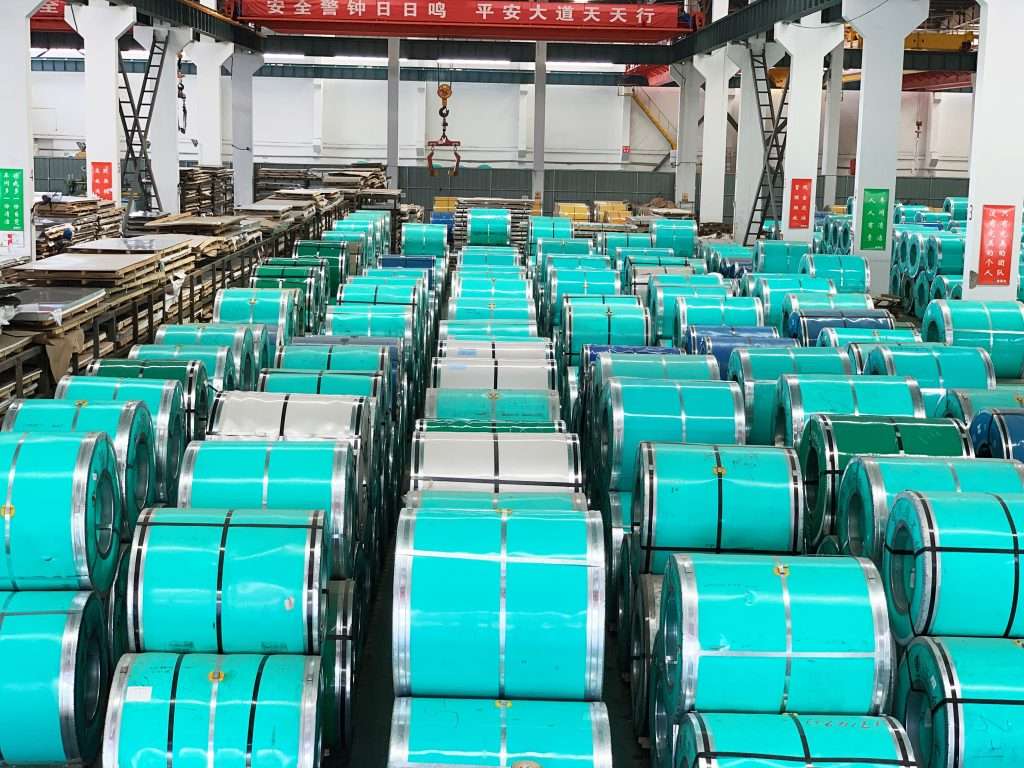
Choosing the right material for car exhaust pipes is very important. 430 stainless steel offers great heat resistance and cost benefits. This makes it a top choice for mid and tail sections of exhaust systems. This article explains the key advantages of 430 stainless steel.
1. Basic Properties of 430 Stainless Steel
430 stainless steel is a ferritic type. Its core features make it ideal for manufacturing exhaust pipes.
High Chromium Content: It contains 16% to 18% chromium. This helps form a stable oxide layer in mid to low temperatures. It provides basic corrosion resistance.
Low Nickel, Low Cost: It contains little or no nickel. This makes its raw material cost 30% to 40% lower than 304 stainless steel. It is perfect for high-volume car production.
Magnetic: 430 stainless steel is magnetic. This allows for easy magnetic particle inspection after welding.
2. High-Temperature Performance Analysis
Different parts of an exhaust pipe face very different temperatures. The front section often exceeds 900°C. The mid and tail sections are usually between 600°C and 800°C.
430 stainless steel handles heat well in the mid and tail sections. It forms a dense, stable oxide layer between 600°C and 800°C. This layer effectively prevents further oxidation of the steel.
Note that 430 stainless steel has its limits. Above 850°C, it oxidizes much faster than 304 stainless steel. Therefore, it is not suitable for very hot areas like the front pipe.
3. Balancing Corrosion Resistance and Cost: 430 vs. 304 Stainless Steel
Car exhaust contains water vapor and acidic substances like sulfur dioxide. 430 stainless steel has less corrosion resistance than 304. But it still works well in specific conditions. It has good resistance to nitric acid.
The main advantage of 430 stainless steel is its cost. It meets performance needs for mid and tail sections. And it cuts material costs by 30% to 40%. This makes it the preferred choice for car makers controlling costs.
The table below compares 430 and 304 stainless steel. It shows the differences between these two exhaust pipe materials clearly.
| Недвижимость | Нержавеющая сталь 430 | Нержавеющая сталь 304 | Key Difference |
| Химический состав | 16-18% Chromium, very low/no Nickel | Higher Chromium and Nickel content | 430 is Ferritic, 304 is Austenitic |
| Устойчивость к коррозии | Good resistance to nitric acid, but weaker than 304 overall | Stronger overall corrosion resistance | 304 is better for highly corrosive environments |
| Ductility | Less ductile | Very ductile | 304 is stronger and better for high-strength applications |
| Теплопроводность | Better (Ferritic structure) | Poorer (Austenitic structure) | 430 has better heat conduction |
| Стоимость | 30%-40% lower than 304 | Higher price | 430 offers great value, ideal for mass production |
| Application | Mid/Tail exhaust sections, fuel burner parts | High-performance exhausts (e.g., supercars), food industry, medical devices | 430 for cost-sensitive projects, 304 for high-performance needs |
4. Core Advantages in Exhaust Applications
The automotive industry prefers 430 stainless steel. It perfectly balances performance, durability, and cost.
Cost-Effective: 430 stainless steel has a clear cost advantage. It is 30% to 40% cheaper than 304. This is ideal for mass production.
Suitable Temperature Range: It can handle temperatures up to 800°C long-term. This matches the working conditions of mid and tail pipe sections.
Easy to Process: 430 stainless steel is easy to weld, bend, and stamp. This allows manufacturers to create complex exhaust pipe shapes.
Low Maintenance: Its basic corrosion resistance reduces rust risk. This means less maintenance is needed later on.
5. Conclusion
Car exhaust systems often use 430 stainless steel. This is the result of matching the right material to the right job at the right cost. For standard vehicles, using 430 stainless steel for mid and tail sections is the best balance of performance and cost.
Contact the JUDESTEEL professional team for custom 430 stainless steel exhaust solutions for your car project.
