
Alloy Steel vs Stainless Steel: Complete Engineering Comparison Guide
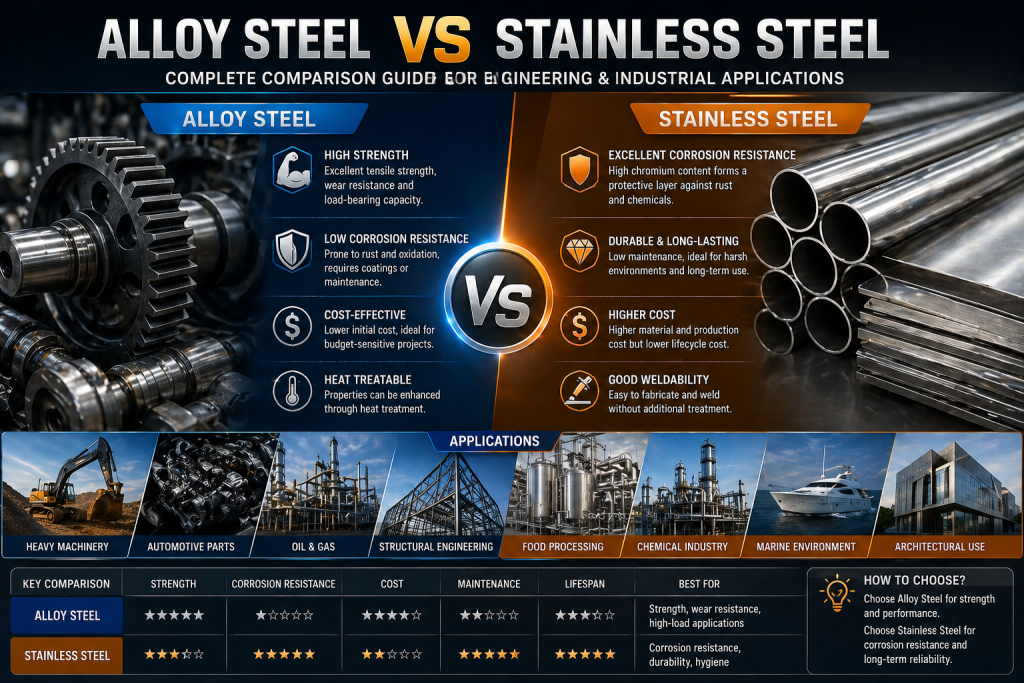
Choosing between alloy steel and stainless steel is a critical decision in engineering, construction, and manufacturing. While both materials are iron-based alloys, they are designed for fundamentally different performance priorities—strength versus corrosion resistance.
This comprehensive guide provides a technical, application-driven comparison to help engineers, procurement managers, and industrial buyers select the most suitable material based on performance, environment, and lifecycle cost.
1. Core Difference Between Alloy Steel and Stainless Steel
The primary distinction lies in their design purpose and composition:
- Alloy Steel: Engineered for strength, hardness, and wear resistance through added elements such as chromium, molybdenum, nickel, or vanadium
- Stainless Steel: Designed for corrosion resistance with at least 10.5% chromium forming a protective oxide layer
In simple terms: alloy steel focuses on mechanical performance, while stainless steel focuses on environmental durability.
2. Chemical Composition and Structure
| Недвижимость | Alloy Steel | Stainless Steel |
|---|---|---|
| Main Elements | Fe + C + Cr/Mo/Ni/Mn/V (varies) | Fe + ≥10.5% Cr (+ Ni/Mo) |
| Microstructure | Depends on heat treatment | Austenitic / Ferritic / Martensitic / Duplex |
| Purpose | Strength & performance tuning | Corrosion resistance & durability |
The presence of chromium in stainless steel creates a self-healing passive film that protects against oxidation and corrosion, which alloy steel typically lacks.
3. Strength and Mechanical Performance
Alloy Steel
- Very high tensile and yield strength
- Excellent wear resistance and fatigue strength
- Performance can be customized via heat treatment
Stainless Steel
- Moderate strength in common grades (304, 316)
- Higher toughness and ductility
- Duplex grades offer both strength and corrosion resistance
Alloy steel is generally superior in pure mechanical strength, making it ideal for high-load applications.
4. Corrosion Resistance Comparison
Alloy Steel
- Low to moderate corrosion resistance
- Requires coatings (painting, plating, oiling)
- Prone to rust in humid or outdoor environments
Stainless Steel
- Excellent corrosion resistance
- Performs well in moisture, chemicals, and marine environments
- Self-repairing passive layer prevents rust
Corrosion resistance is the single biggest differentiator, with stainless steel clearly outperforming alloy steel in harsh environments.
5. Cost and Lifecycle Analysis
| Factor | Alloy Steel | Stainless Steel |
|---|---|---|
| Initial Cost | Lower | Higher |
| Maintenance | Regular required | Minimal |
| Service Life | Shorter in corrosive environments | Longer lifespan |
| Lifecycle Cost | Potentially higher | Lower over time |
Although alloy steel is more economical upfront, stainless steel often delivers better long-term value due to reduced maintenance and replacement costs.
6. Heat Resistance and High-Temperature Performance
- Alloy Steel: Excellent high-temperature strength; widely used in power plants and heavy machinery
- Stainless Steel: Good oxidation resistance; specialized grades (e.g., 310S) perform in extreme heat
Alloy steel excels in structural strength at high temperatures, while stainless steel provides better oxidation resistance.
7. Fabrication and Welding
Alloy Steel
- Requires preheating and post-weld heat treatment
- Risk of cracking if improperly processed
Stainless Steel
- Excellent weldability (especially austenitic grades)
- No additional surface protection required after welding
Stainless steel is generally easier to fabricate and maintain in welded structures.
8. Typical Applications
Alloy Steel Applications
- Heavy machinery and equipment
- Automotive components (gears, shafts)
- Tooling and molds
- Structural engineering
Stainless Steel Applications
- Food processing and medical equipment
- Marine and offshore structures
- Chemical processing plants
- Architectural and decorative use
The application environment largely determines the material choice—strength-critical vs corrosion-critical scenarios.
9. How to Choose Between Alloy Steel and Stainless Steel
- Choose Alloy Steel if: Strength, wear resistance, and cost are primary concerns
- Choose Stainless Steel if: Corrosion resistance, hygiene, and durability are critical
For long-term outdoor or chemical exposure, stainless steel is usually the safer investment. For high-load structural parts, alloy steel remains the preferred option.
Frequently Asked Questions (FAQ)
Is stainless steel stronger than alloy steel?
Generally, alloy steel has higher strength, while stainless steel offers better overall durability and corrosion resistance.
Why is stainless steel more expensive?
It contains higher amounts of chromium and nickel, which increase production costs.
Can alloy steel rust?
Yes, alloy steel is prone to rust unless protected with coatings or treatments.
Which material lasts longer?
In corrosive environments, stainless steel typically lasts significantly longer than alloy steel.
Can stainless steel replace alloy steel?
In some cases, yes—but for high-strength mechanical applications, alloy steel is still preferred.
Conclusion: Alloy steel and stainless steel serve different engineering purposes. Alloy steel delivers unmatched strength and performance under stress, while stainless steel ensures long-term reliability in corrosive environments. Selecting the right material requires balancing mechanical demands, environmental exposure, and total lifecycle cost
